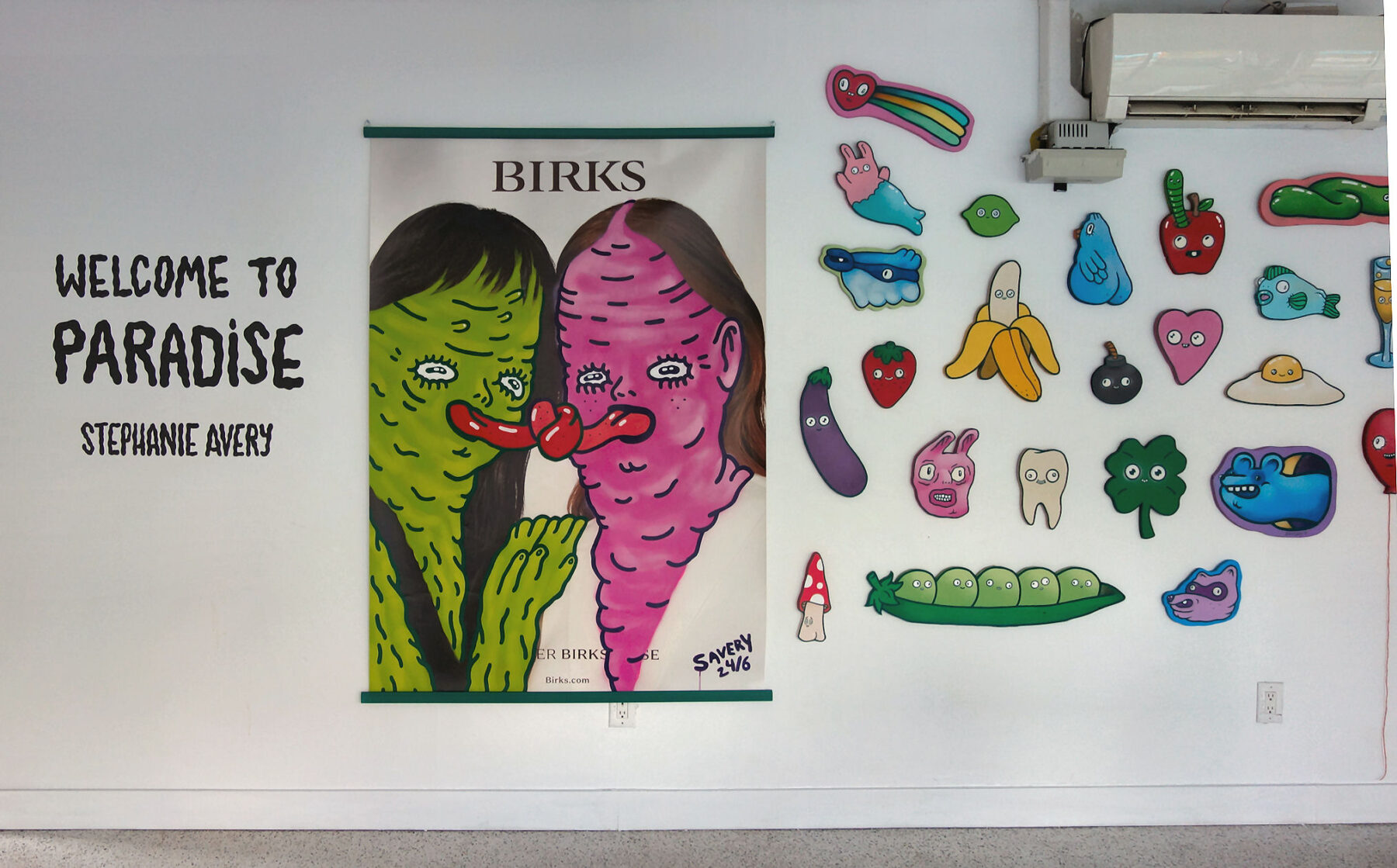
Your exhibit Welcome to Paradise brings mural and street art into a gallery context. How did you adapt that large-scale energy into the North Hall space?
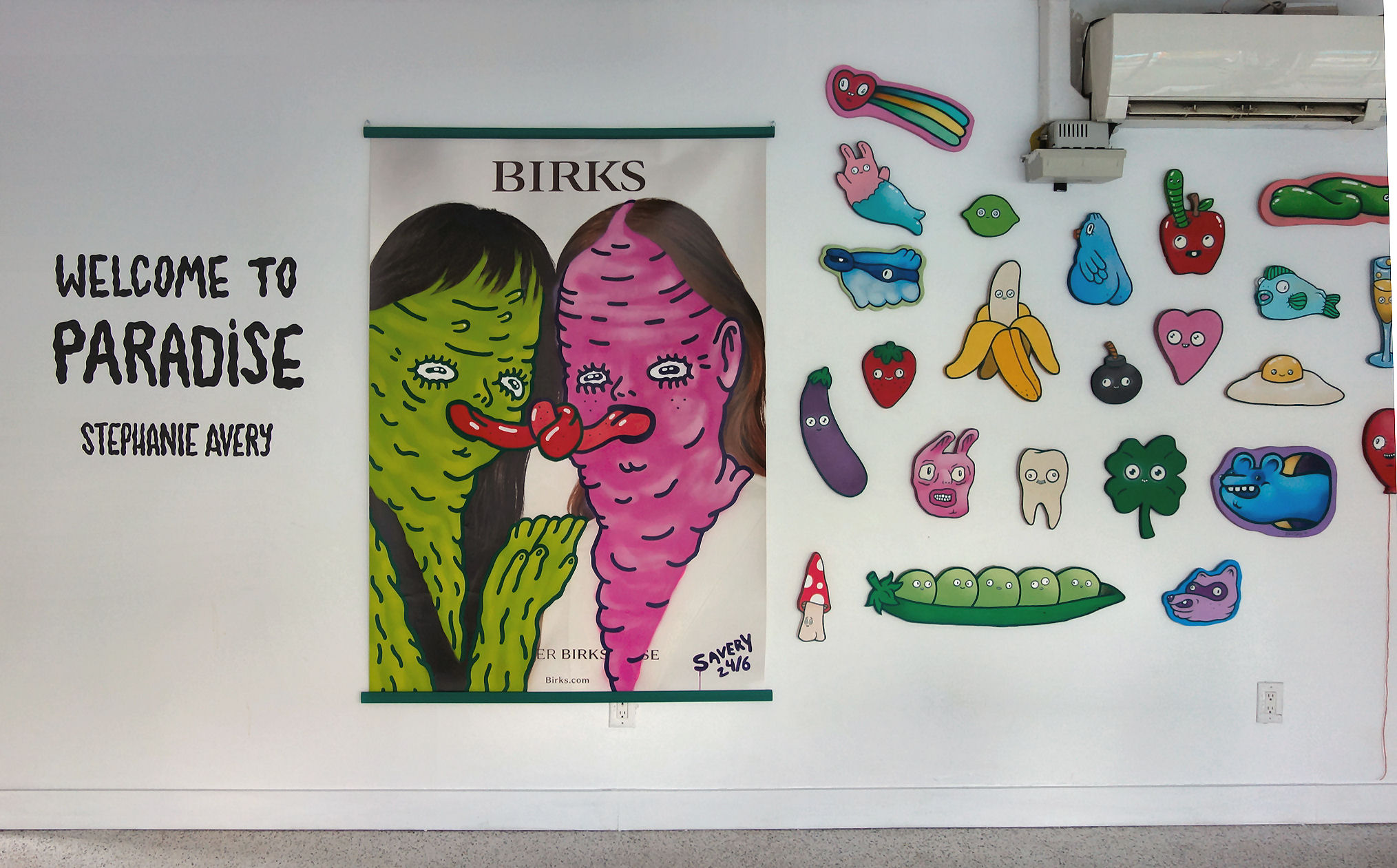
I was creating street art long before I started painting murals, often in the spirit of culture jamming (not so different from some of the advertisement pieces in the exhibit). Getting into murals really transformed my way of painting – embracing spray paint and using bolder colours and thick outlines to make my designs stand out on massive walls. It was an easy pivot to apply those materials, themes and aesthetics into the smaller scale pieces that adorn the gallery. It also helps that most of the pieces in the exhibit are painted on found or repurposed objects from the urban landscape. I’ve physically put elements from the street into the gallery and, in doing so, brought that large-scale energy with me.
You describe your practice as using “absurdity as a strategy of resistance.” How do humor and playful characters help you tackle heavy topics like consumerism?
Humour is a phenomenal tool. Not only has it always been my coping mechanism and a form of healing, it’s amazing for communication. There is a very important place in the world for overtly political art but sometimes, and this is in no way a criticism of that art, I feel like it alienates the people it could be building bridges with, and ends conversations before they can start. I treat my work as part of an ongoing dialogue that I want to be having with people regardless of their belief systems. Humour creates a shared positive experience between viewers and facilitates interesting conversations that I don’t think would be possible if I started on a serious note. It might feel small but I truly believe that by connecting with one another over humour we’re able to grow and heal in a way that can lead to real positive change.
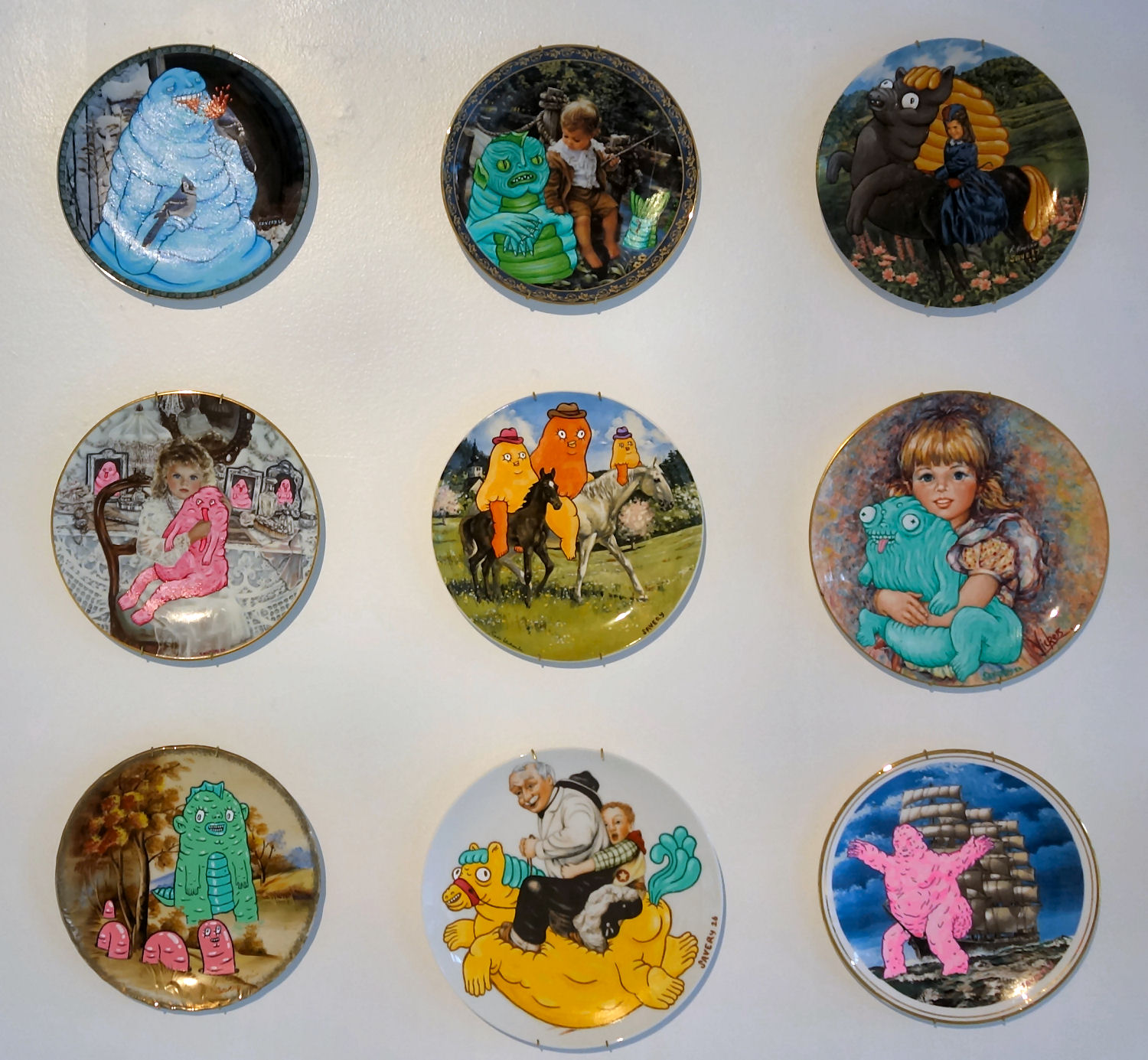
Nearly everything in the show is made from reclaimed urban materials like condo signage, bus ads, and found plates. What is your process for sourcing these items, and how do they inform your art?
This is a little bit of a chicken and egg question for me. Was I initially drawn to these objects because they were abundant and available or was their abundance and availability what made them interesting and relatable? The first iterations of what you see in the exhibit were quick paintings on magazine ads to warm up for more “serious” paintings on canvas. It wasn’t long before the ad paintings took over. Part of that was because blank canvases can be intimidating (and expensive), as opposed to tearing a page out of a magazine I salvaged from the trash. But I was also interested in exploring and subverting our relationships to the medium. We’re all deeply familiar with the language of advertisements, which made for a really interesting jump-off point for a body of artwork.
My work became less about centering my voice and more about an ongoing conversation between mass-media/mass-production, my artistic additions, and viewers’ reactions. Since those early days I’ve expanded into different forms of found objects. Because conversation is so pivotal to my process, the work has evolved to be less of a blanket critique of consumer culture and more of a space for grace, healing and empowerment within the power structures in which we exist but can’t control.
The organic forms you paint on consumer objects represent community and connection. How do you use art to carve out human connection in an overwhelming commercial landscape?
Ironically it’s my use of the familiar commercial landscape that helps facilitate human connection. Viewers already have relationships with the objects and spaces I intervene with, which act as handy entrance points to my artwork and as common ground with one another.
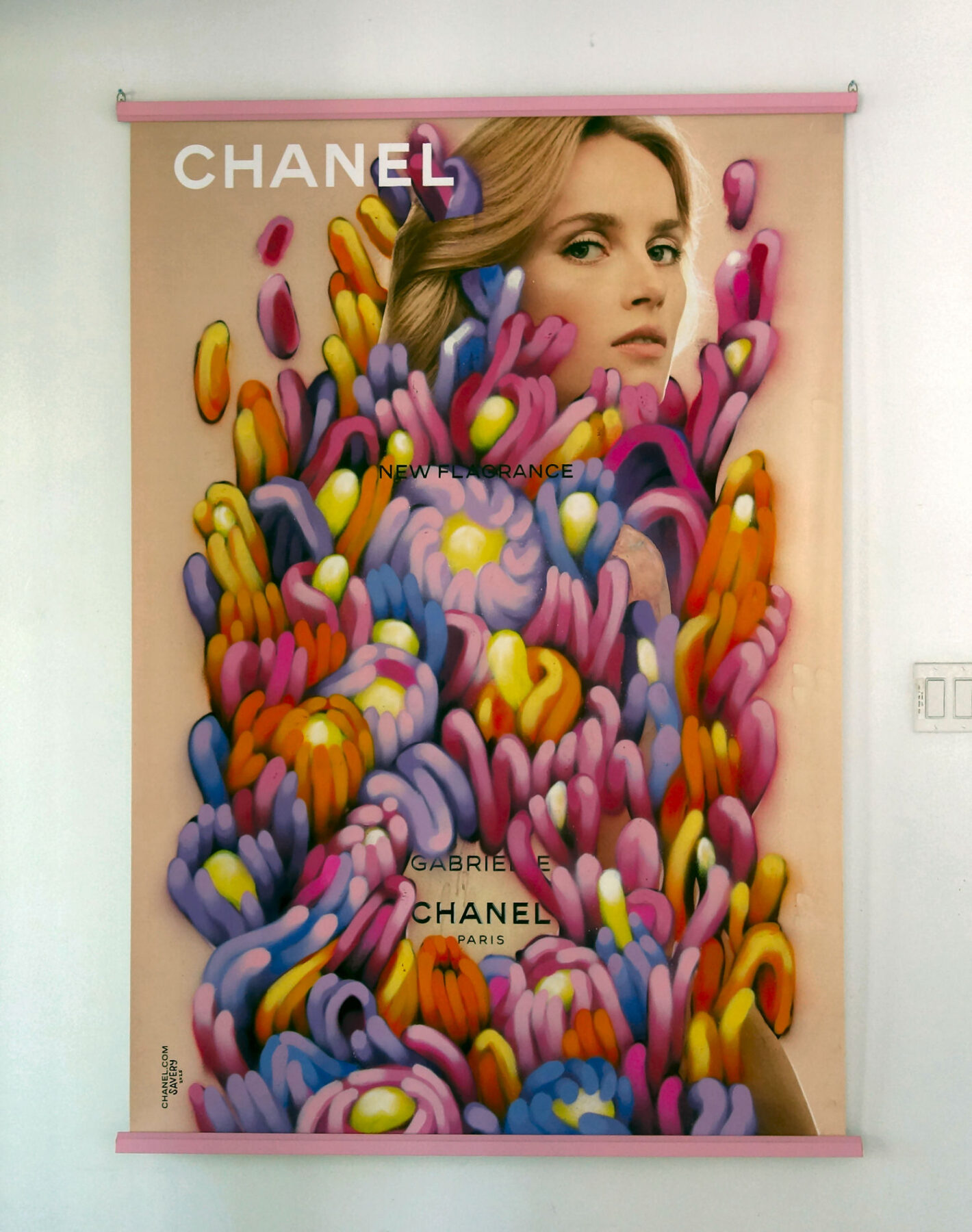
I began painting my organic shapes during the peak of pandemic lockdown (my Chanel bus shelter ad painting is the best example of this style in the exhibit). I was inspired by sea anemones both visually, with their blobby, intertwining tendrils, and metaphorically, imagining them submerged and isolated underwater, their long tendrils stretching outward in search of contact. As we emerged from lockdowns, these forms evolved into a representation of the interconnectedness and diversity of community: each shape is a unique individual, yet together they form a vibrant, thriving ecosystem.
You’ve included a few rare pieces made entirely from scratch as a “respite from the noise.” What inspired these non-repurposed works, and what do they represent for you?
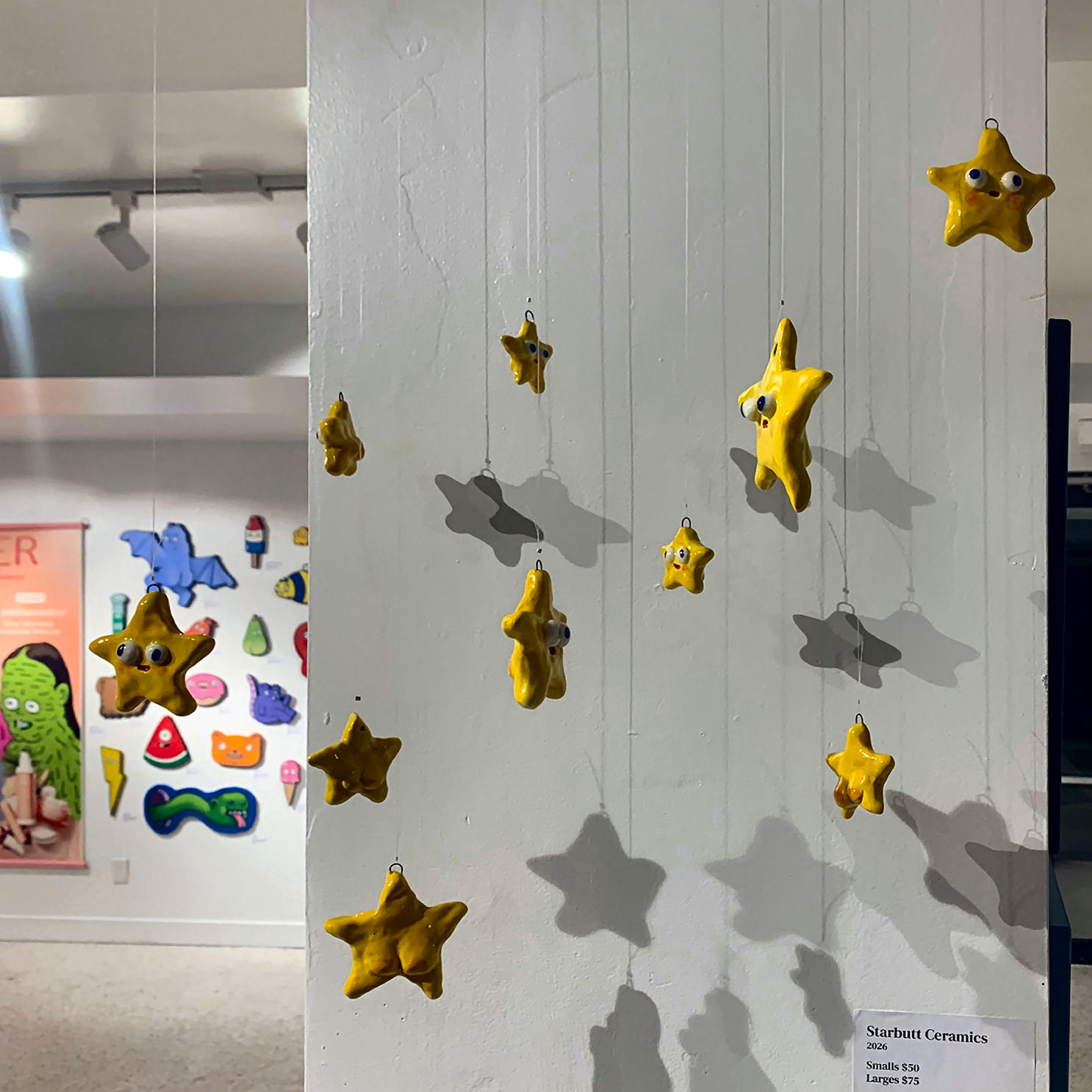
To be honest, when I sent my initial art statement for the show I intended to make more completely original pieces than what made the final cut. There are a few (for example, the cluster of hanging star butts), but as the exhibition came together those pieces didn’t quite feel like they worked with the narrative. My plan was to have little pockets of small pieces that visitors would have to work to discover, rewarding their attention to detail and symbolizing the effort we have to make to escape the relentless noise of the content we consume. But this show isn’t about escaping the noise – it’s about subverting it and carving out space within it to find joy and connect with one another.
As a Toronto-based artist, what does it mean to exhibit your work in a dynamic, repurposed container space like STACKT market?
So much of my work is about creating third spaces in a city that has prioritized fast development over community building. It’s about accessing play and joy. It’s about utilizing existing power structures to our advantage. That’s STACKT.
Going back to my ties to street art – street art is a medium in which impermanence is celebrated. There’s something beautiful about acknowledging its temporary nature, of appreciating it while we can because we know it will one day be gone. That’s a message I think we should apply to the way we live our lives – we’re here for a short time and we need to make the most of it, for ourselves and for others. That’s also STACKT.
Even though this is an ongoing body of work, at STACKT market it feels site-specific.
What do you hope visitors take away when stepping into Welcome to Paradise, and where can our community find your murals and artwork around the city?
I want visitors to come out of my show feeling empowered to face aspects of their own lives that strip them of their power. These days, many of us feel caught between being hyper-aware and overwhelmed by the world around us, or disengaging completely because we’re exhausted. Neither of these options help us. I want to remind people that an in-between is possible – one in which we acknowledge the hardships of existence while still making space for joy, beauty and silliness. It’s easy to feel stuck or daunted, as though our individual choices don’t matter. What we have to remember is that real change happens incrementally and our actions, however small, do make a difference.
If I can transform a mind-numbing Starbucks juice ad into the happiest pineapple finally finding its ass, anything is possible!