What first sparked the idea behind this exhibition? How did your idea evolve once you
knew you’d be bringing it to STACKT?
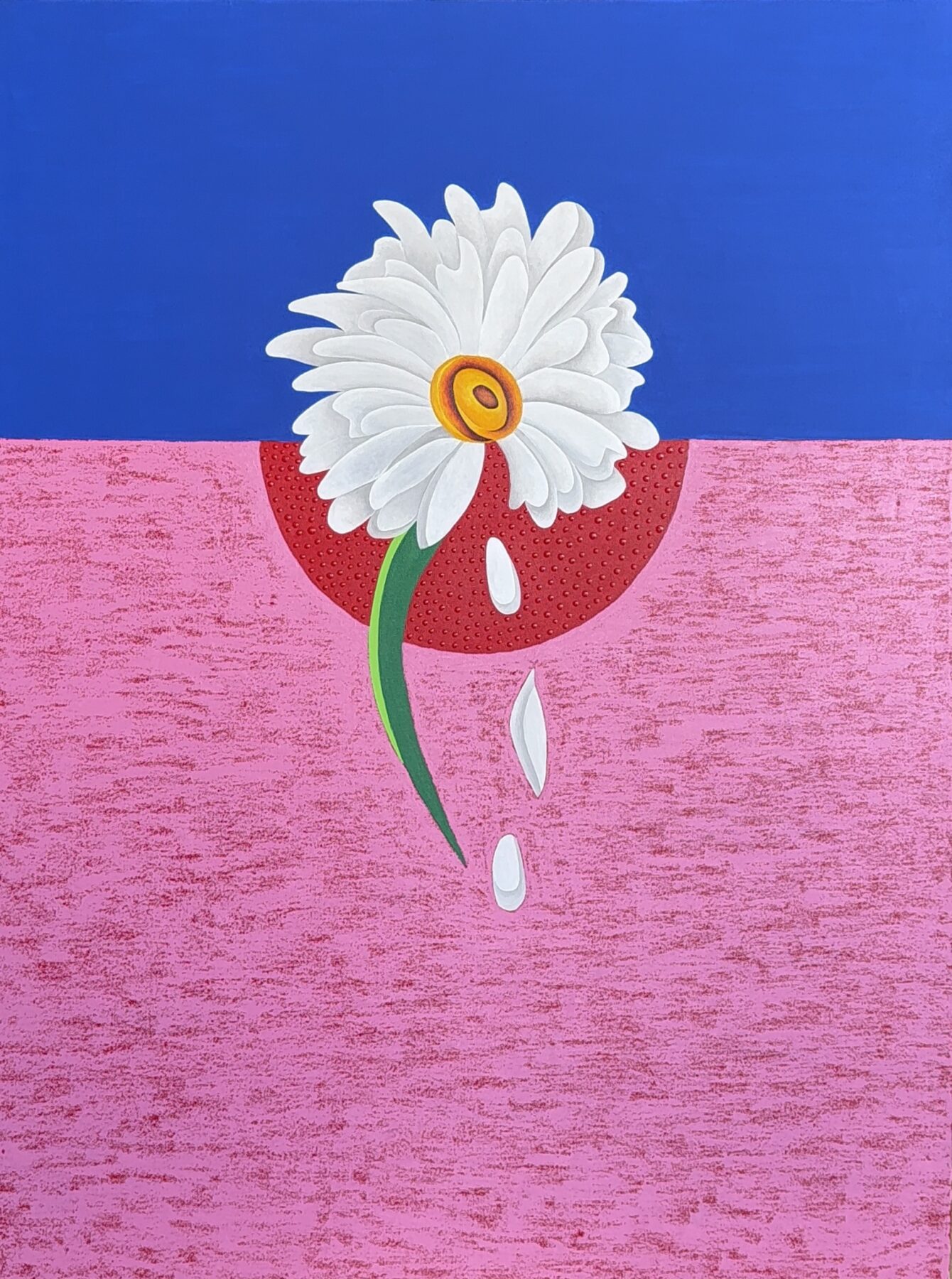
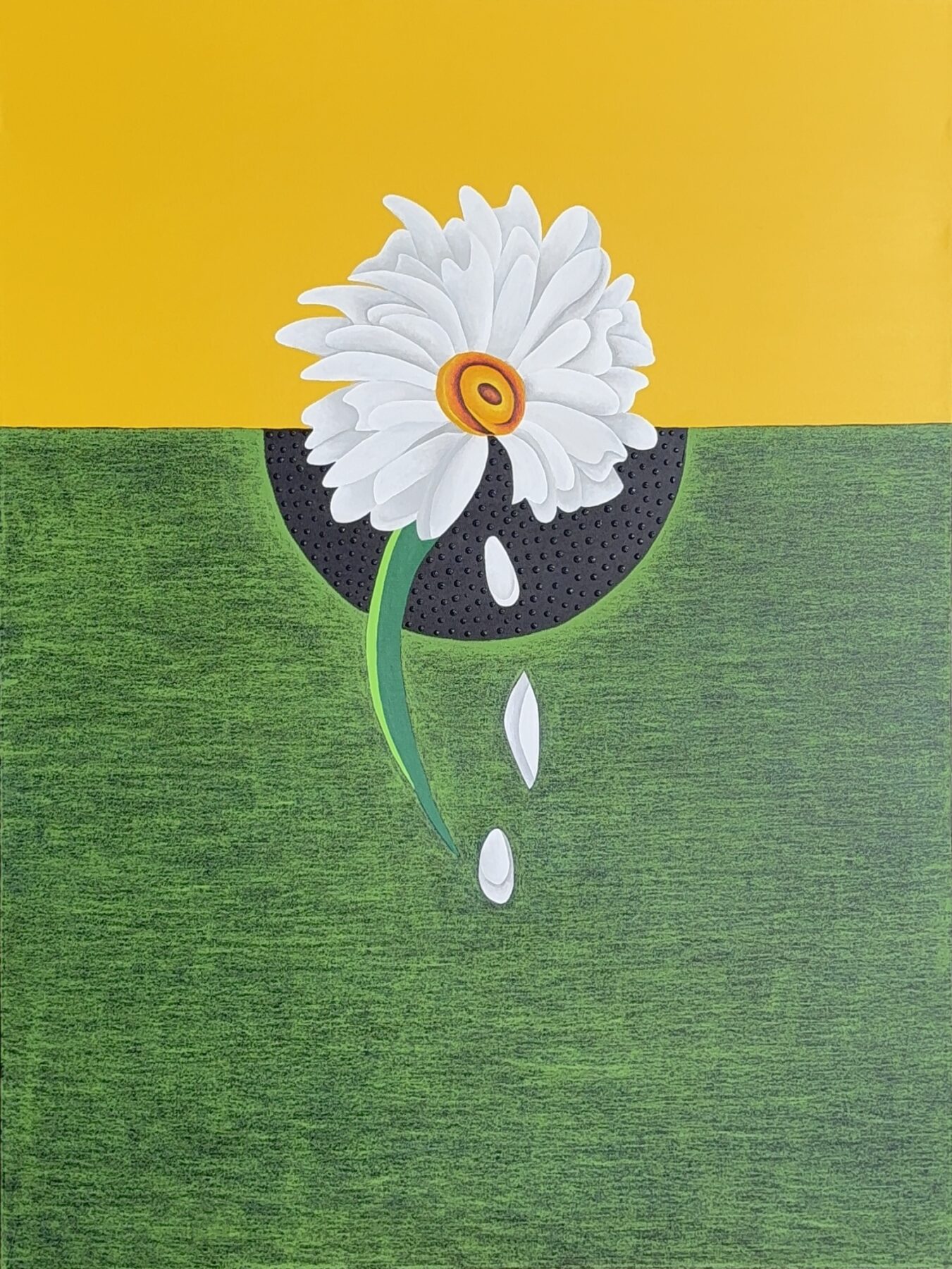
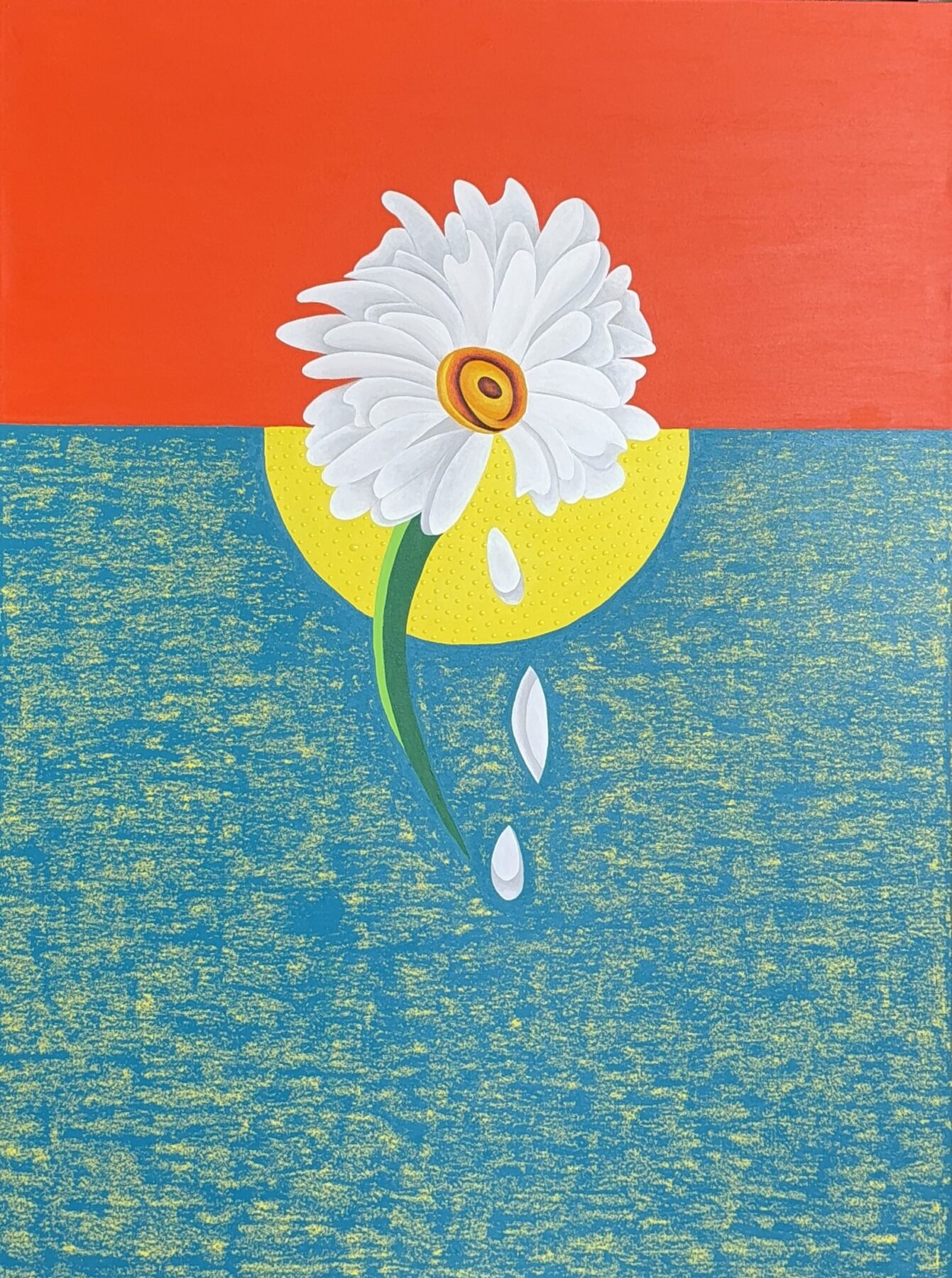
The Daisy series began from a desire to explore a softer kind of strength. My work often leans
into emotional intensity and layered themes, and I felt ready to return to something more
playful, something rooted in innocence and hope.
“He loves me, he loves me not” is such a simple childhood ritual, yet it carries a quiet
anticipation we all recognize. The daisy became a way to revisit that moment before love
becomes complicated.
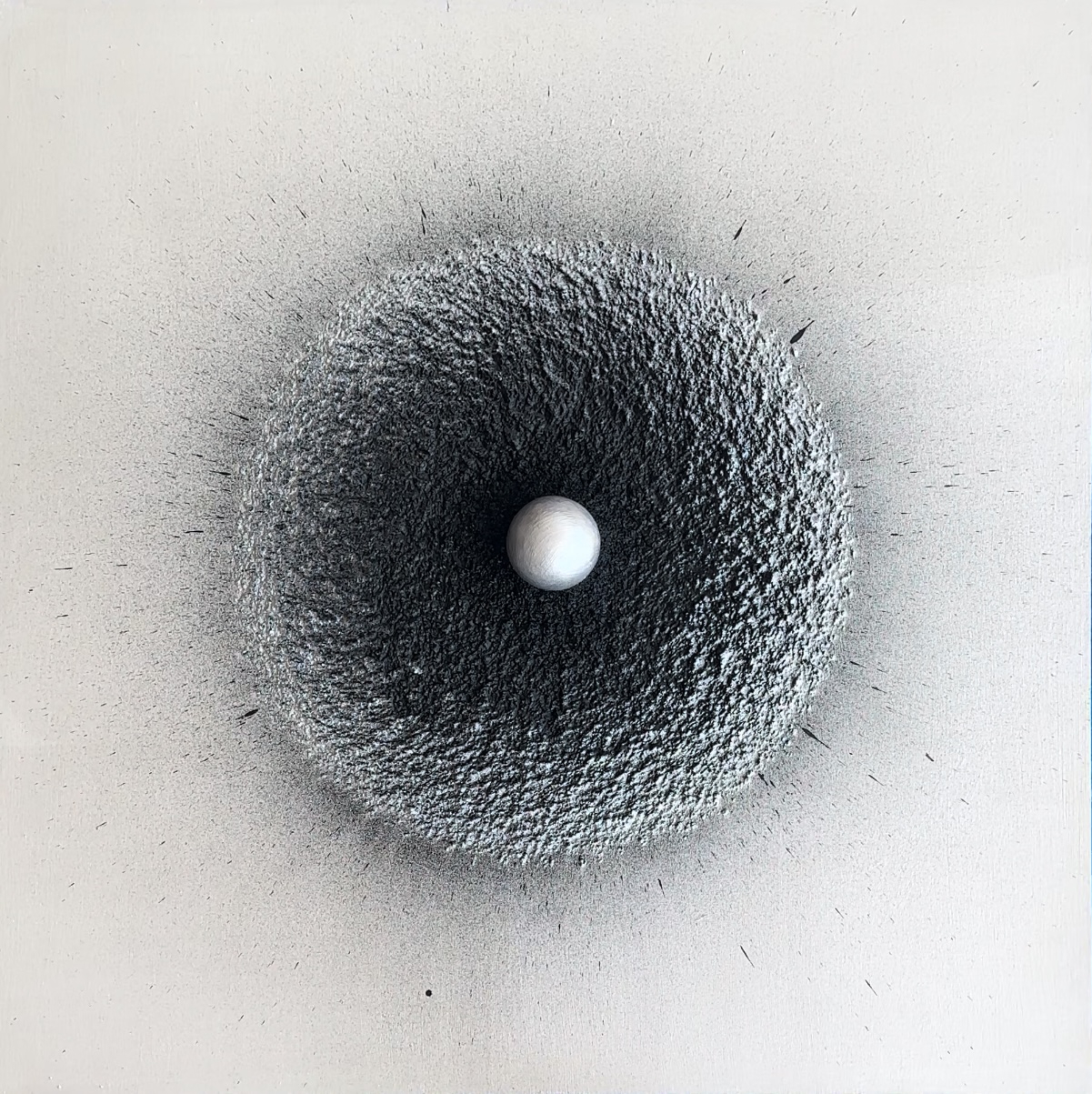
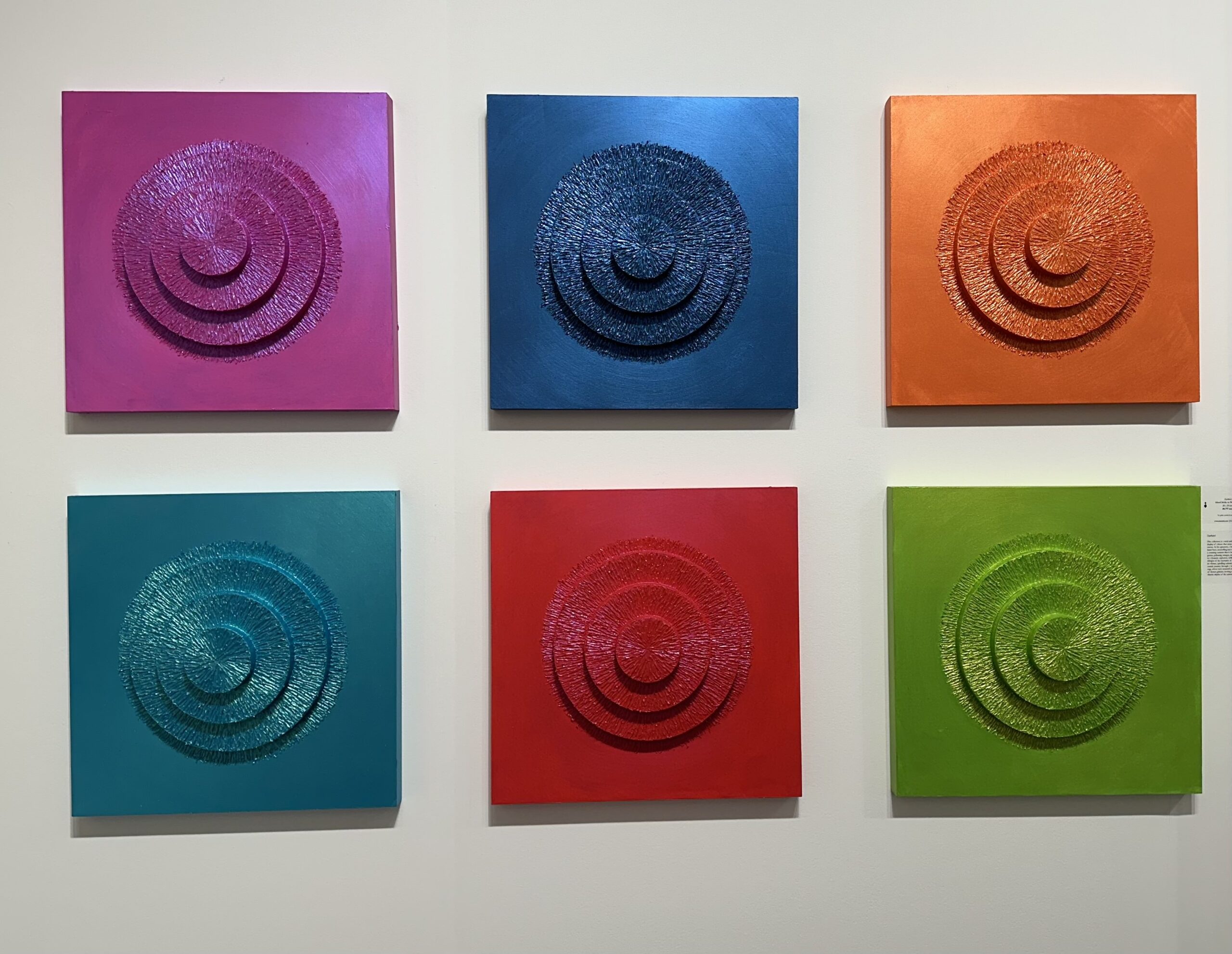
This is the first time the Daisy series is being showcased, alongside my metallic sphere works,
which are also debuting as a body of work. Bringing both to STACKT feels especially meaningful
because the space is alive and community driven. The two series exist in conversation with one
another, softness and structure, vulnerability and control, and I am curious to see how people
experience and interpret them within such an energetic environment. While much of my earlier
work confronted uncomfortable truths, this new chapter focuses on creating space for optimism
and inviting viewers to discover their own meaning in what they see.
Are there any personal influences or experiences that shaped this exhibition?
Growing up in Baghdad and later building my life in Canada shaped how I understand balance.
Moving between cultures taught me resilience, but it also taught me compassion. In Iraq, the
contrast between wealth and poverty was stark, and witnessing that disparity at a young age
gave me a deep sensitivity to the human experience. Education became the bridge that helped
me navigate those drastic shifts and find clarity within them.
That journey naturally finds its way into my work. My earlier collections confronted difficult
realities, exploring justice, conflict, and the tensions people often avoid discussing. This new
chapter emerges from a different space. The metallic spheres reflect structure and endurance, a
sense of grounding and rebuilding. The Daisy series explores innocence and hope, and the
conscious choice to protect softness even after experience reshapes us.
Together, they represent my ongoing evolution, moving from intensity toward optimism while
still carrying the depth of everything that came before.
How do you hope people feel when they discover your work for the first time?
I hope people feel curious first. I want them to pause and look a little longer than they expected
to. Whether it is the softness of the daisies or the tension in the metallic surfaces, I hope there
is a moment when something feels familiar, even if they cannot immediately explain why.
For me, the work has never been about my interpretation alone. It is about how others
experience it. That is where the real conversation begins. Each person brings their own lens and
history, and when the art reflects something personal back to them, it becomes theirs in a way I
could never control.
More than anything, I hope the work creates a quiet shift. Not something loud or dramatic, but
a subtle recognition of their own strength, vulnerability, or memory. When art can hold that
kind of mirror, even briefly, it becomes something you carry with you long after you leave the
space.
Where else can people find your art in Toronto?
My work can be viewed through my website at MaisArts.com, where I share current collections
and upcoming projects. I also offer glimpses into my studio process and new releases on
Instagram at @maisartlove. While I have always felt most fluent with a brush in hand, I continue
to explore new ways of connecting beyond the canvas and engaging with audiences more
directly.
Many of my paintings are large scale, some spanning 18 to 21 feet, which means they often live
within private galleries and curated exhibitions rather than spaces encountered casually. Their
scale gives them a powerful physical presence in person, though it also makes them less visible
in everyday settings.
Looking ahead, I see my practice expanding into larger public platforms within Toronto. Events
like Nuit Blanche inspire me, particularly the idea of bringing emotionally driven and immersive
work into the streets where it can be experienced by anyone. I am drawn to art that moves
beyond traditional walls and becomes part of the city’s cultural rhythm, and that is the direction
I am building toward.
How does creating artwork for a community space differ from creating for a gallery or
studio setting?
Creating for a community space feels more intimate. In a gallery or museum setting, the
environment can be quieter and more formal, which sometimes creates subtle distance
between the viewer and the work. Community spaces tend to feel more open and fluid, and
that shift changes how the work is encountered.
There is something deeply personal about creating within a specific community. It brings me
closer to the shared experiences that connect people in that space, and that emotional proximity ignites a different kind of energy. When the audience feels more immediate and
present, the work becomes less about broad appeal and more about human resonance.
In a space like STACKT, which is vividly alive and community driven, there is an openness that
allows people to put their guard down. They can experience the work naturally, without
intimidation or pressure. For me, that accessibility does not dilute meaning, it expands it. It
allows the conversation to move beyond traditional art audiences and become part of a broader
and more authentic cultural dialogue.
Is there any other art in Toronto that you find really exciting right now?
Toronto has a strong and diverse art community, and I deeply respect the range of voices
shaping it. What excites me most right now is the renewed energy as people return to
experiencing art in person. The pandemic years created distance from the kind of inspiration
that only comes from standing in front of a work and feeling it fully, and it is encouraging to see
that passion returning.
Toronto has always been a city where culture thrives, much like our remarkable culinary scene
where world class chefs continue to push boundaries. I believe the art community deserves that
same spotlight and enthusiasm.
I believe Canadian art culture is standing at a moment of real potential. There is extraordinary
talent here, but I would love to see even greater encouragement for boldness and
experimentation. Art should not only be admired, it should question, stretch, and provoke.
When artists are empowered to explore emotionally charged or uncomfortable territory
without restraint, the cultural landscape becomes richer and more globally resonant. I am
deeply interested in contributing to a Canadian art scene that embraces that courage and is
unafraid to push its own boundaries.
What is your perfect day at STACKT, and how does it capture the spirit of “SPACE FOR US”?
My perfect day at STACKT would begin with coffee in hand, walking through the space as it
slowly wakes up. There is something special about watching it shift from quiet to vibrant. Music
begins, conversations build, and people wander with curiosity.
As the day unfolds, I imagine people encountering the work unexpectedly. Someone smiling at
the innocence of the daisies, someone leaning closer to study the metallic textures, friends
debating what they see. I love that kind of spontaneous interaction. It makes art feel alive rather
than formal.
To me, “SPACE FOR US” means creating room for everyone to feel included in the experience.
Not just art insiders, but families, friends, strangers passing through. It is about removing
pressure and allowing curiosity, connection, and different interpretations to coexist. A space where people can reflect, engage, and simply exist without feeling intimidated. That shared
openness and energy are what make STACKT meaningful.