Currently exhibited at STACKT Market, her practice moves between gallery and community space, with permanent works integrated into Toronto hospitality destinations like Montauk Bar and Gochu Libre Kantina, where art becomes part of the atmosphere and brand identity.
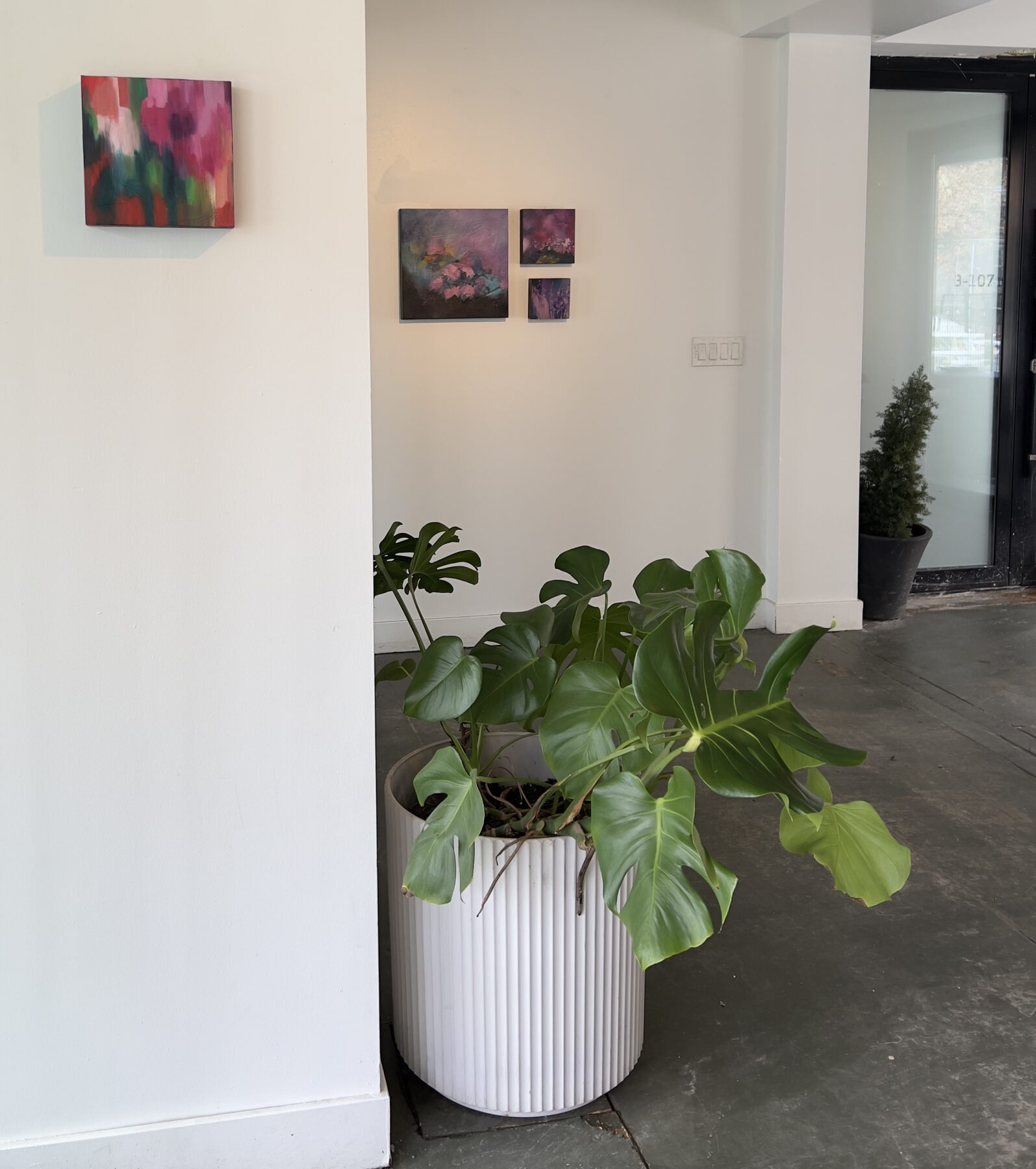
What first sparked the idea behind this work? How did it evolve once you knew you’d be bringing it to STACKT?
The project began during a long recovery after surgery, when I was isolated at home in winter. I’ve always pictured retiring to a slower life – painting flowers in open fields – and, unexpectedly, that future arrived early.
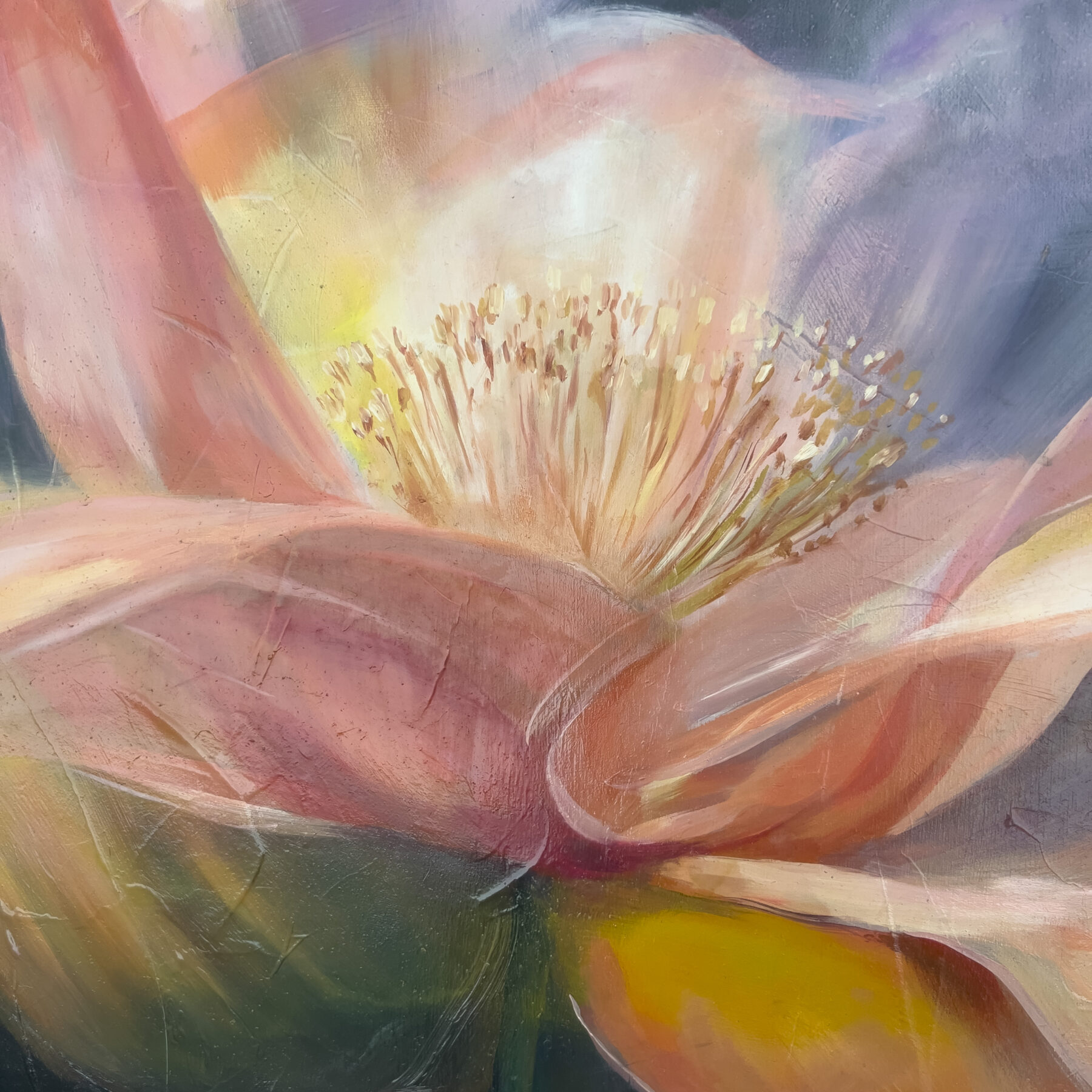
With no access to real flower fields, I turned to online references, many of them AI-generated images. Encountering these digital representations, rather than physical landscapes, shifted my process from simple observation into a deeper inquiry about authorship and authenticity. I wasn’t just painting flowers; I was translating AI-generated, digital images of nature into tangible, handmade works.
When I learned the paintings would be exhibited at STACKT market, the work evolved from a private act of healing into a public body of work. I began thinking about scale, rhythm, and cohesion.

Are there personal influences or experiences that shaped this work?
Recovery was the defining influence. Stillness and isolation created space for repetition, reflection, meditation, and structure.
There’s also the broader influence of living within digital culture. Relying on AI-generated, digital images as references made me question how human-made physical art can be shaped by technology. The work now sits between two realities – digital simulations of nature and handmade, physical representations of it—balancing personal longing with physical presence and blending private experience with public display.
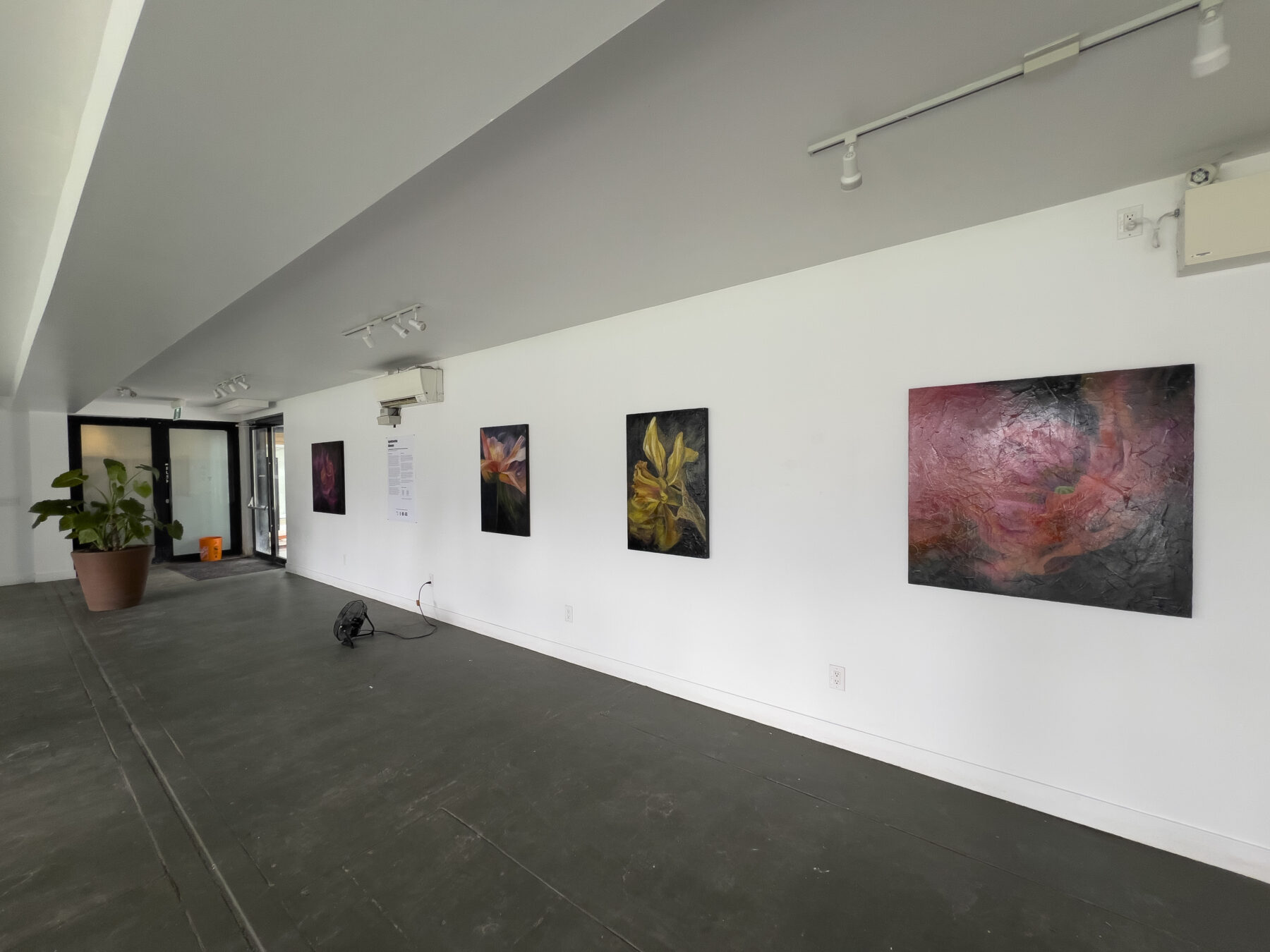
How do you hope people feel when they discover your work for the first time?
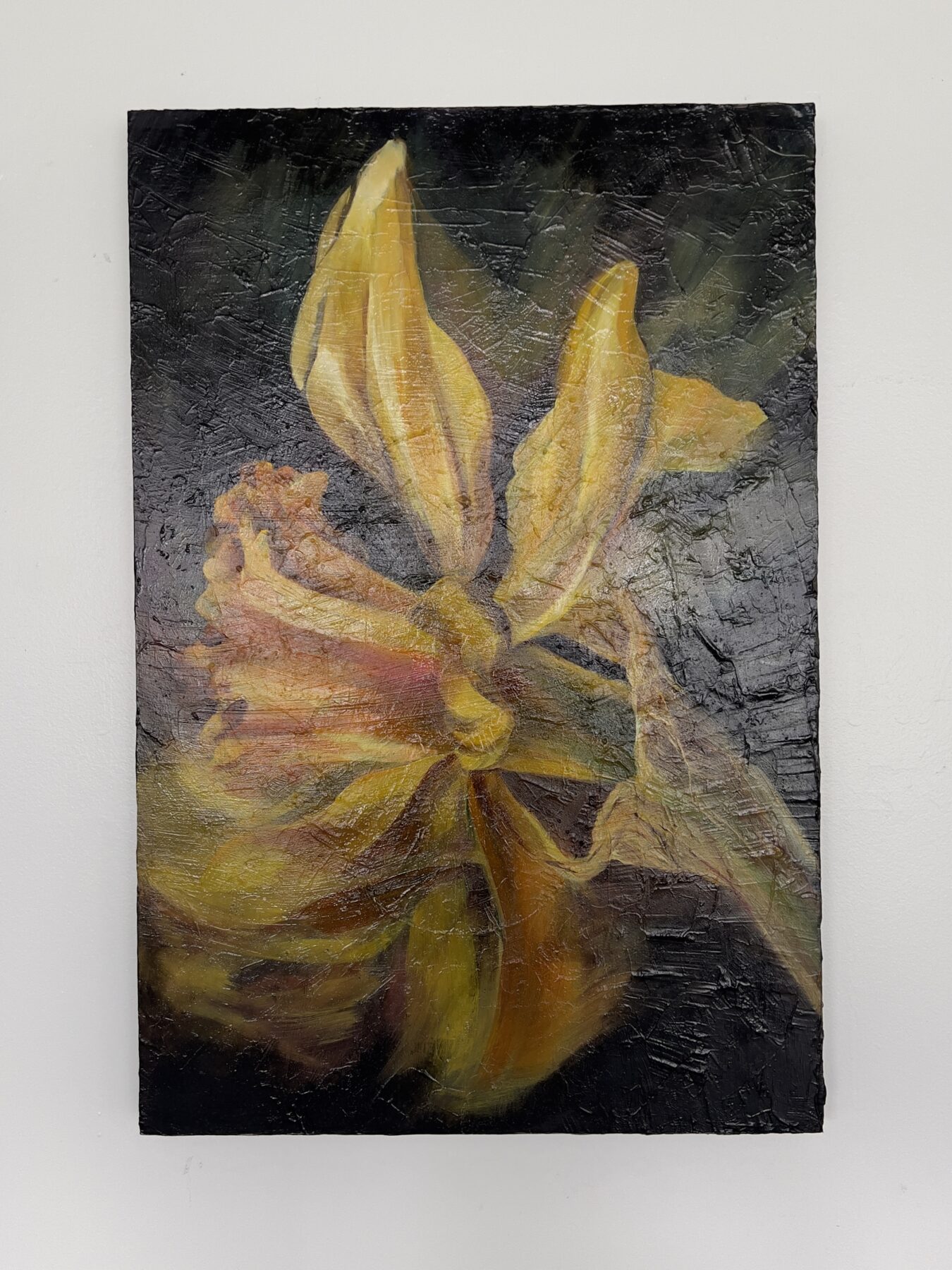
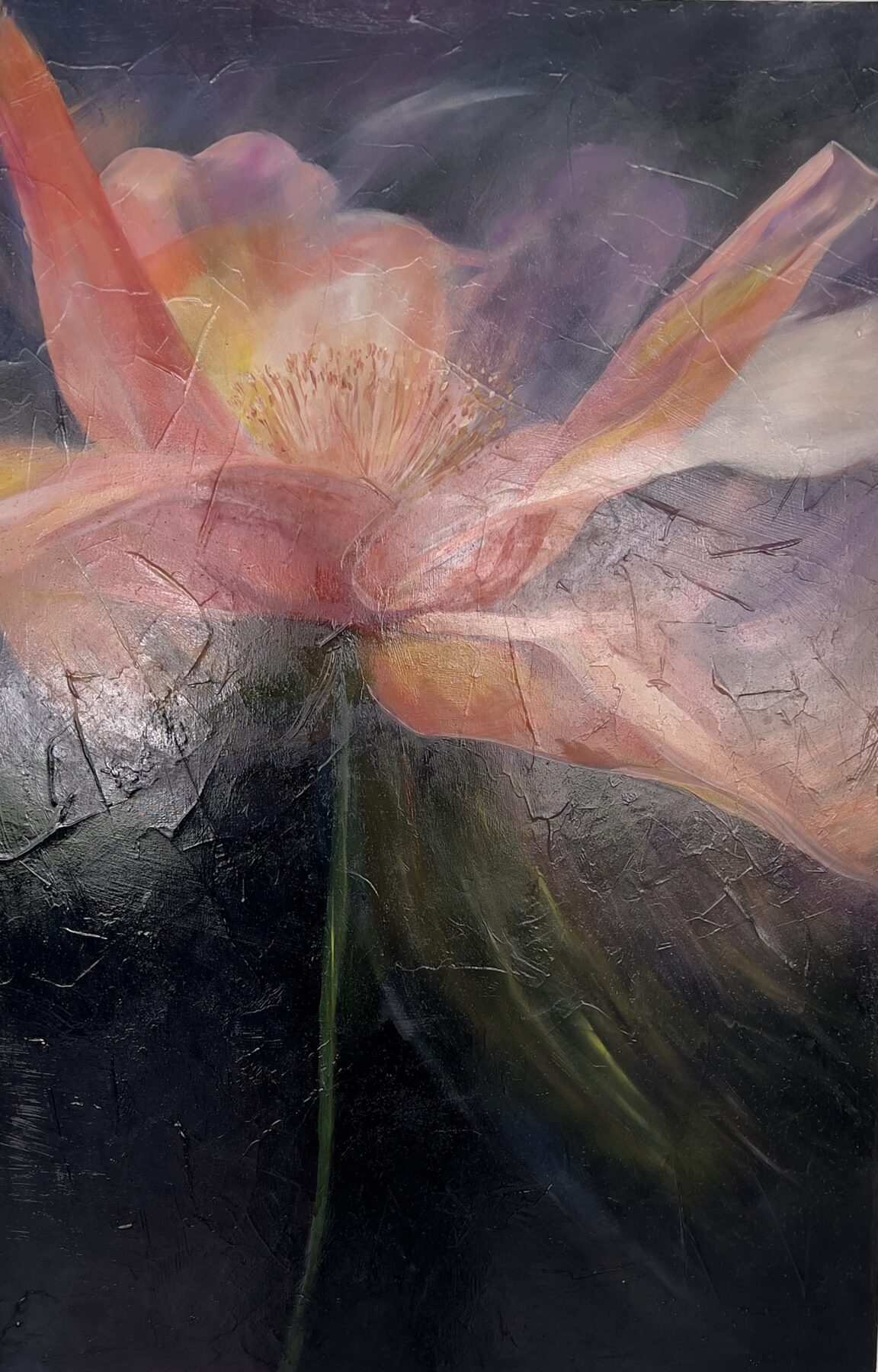
I hope people first feel stillness – the bright flower isolated on black, suspended in space, like standing alone in a field.
Then the stirred lines disrupt that calm, introducing movement and tension – like the bloom vibrates or expands. This shift is important; it turns the work from simply beautiful to questioning.
Ultimately, I want it to feel intimate yet charged – suspended in a space between digital sources and physical, handmade execution, between isolation and connection. Tender, but slightly unsettling.
Where else can people find your art in Toronto?
Beyond this exhibition, my work can be experienced through my interior projects across Toronto. I’m one of the founders of Confit Design, a studio specializing in brand-driven interiors for the hospitality industry.
At Montauk Bar, I created the back wall mural – a large-scale piece that anchors the space and shapes its atmosphere.
At Gochu Libre Kantina, my mixed-media artworks are integrated throughout the main floor and downstairs areas, becoming part of the restaurant’s visual identity and spatial storytelling.
In these projects, my art lives beyond the white wall – embedded into environments where people gather, dine, and connect.
How does creating artwork for a community space differ from creating for a gallery or studio setting? How does creating artwork for a community space differ from creating for a gallery or studio setting?
Creating artwork for a community space is about immersion. The work lives alongside conversation, movement, music, and shifting light – it becomes part of an atmosphere rather than the sole focal point.
In hospitality environments, like the spaces we design at Confit Design, the artwork supports a larger narrative. It strengthens brand identity and shapes mood, often subconsciously, as people gather and connect. Scale, materiality, and durability all respond to that context.
In a gallery setting, the relationship is more intimate and contemplative. The work holds space differently. It invites pause and focused attention. Both contexts are powerful – they simply require different sensitivities.
Is there any other art in Toronto that you find really exciting right now?
I’m especially drawn to smaller, more intimate spaces, and I feel very lucky to reside in a great neighbourhood for the arts.
I enjoy spending time at Cry Baby Gallery – the programming feels raw and immediate, and the back bar adds a layered, social energy that blurs the line between exhibition and gathering.
I’m also a big fan of Worth Gallery. It feels thoughtful and focused, with a strong curatorial voice. Both spaces offer a real closeness to the work – you’re not just viewing art, you’re inhabiting it.
And I always appreciate what’s happening at The Drake Hotel. It’s a place where art, music, hospitality, and culture intersect naturally, creating an energy that feels both curated and spontaneous.
What’s your perfect day at STACKT, and how does it capture the spirit of “SPACE FOR US”?
My best memories at STACKT Market are tied to good friends, music, and food. It’s the kind of place where you come for one thing and end up staying for everything – an exhibit, a pop-up shop, a spontaneous performance.
A perfect day is layered: discovering a show, wandering shops, sharing a meal, running into familiar faces. There’s always movement, but it never feels chaotic – it feels alive.
“SPACE FOR US” is more than physical space. It means making room for creativity, culture, and connection to unfold.